Resources
How Vigan Preserves the Soul of Philippine Heritage
A UNESCO World Heritage City where history, architecture, and living traditions endure
Vigan stands as one of the Philippines’ most well-preserved historic cities—a place where cobblestone streets, ancestral houses, and colonial architecture bring centuries of history vividly to life. As a UNESCO World Heritage City, Vigan offers visitors an immersive journey into the country’s Spanish-era past, where daily life, traditions, and architecture remain deeply rooted in history.
As travel interest continues to grow, Vigan’s timeless character reinforces its position as a cultural destination that goes beyond sightseeing, offering an authentic encounter with Philippine heritage and identity.
Why Heritage Cities Matter in the Philippines
While many destinations focus on modern attractions or natural landscapes, heritage cities like Vigan play a vital role in preserving cultural memory.
They safeguard architecture and urban design from the colonial period
They offer immersive experiences rooted in tradition and history
They provide meaningful storytelling through preserved streets and homes
They strengthen cultural identity across generations
Vigan embodies these values through its carefully conserved cityscape and living traditions.
What Sets Vigan Apart
Rather than being a single historical site, Vigan functions as a complete heritage environment.
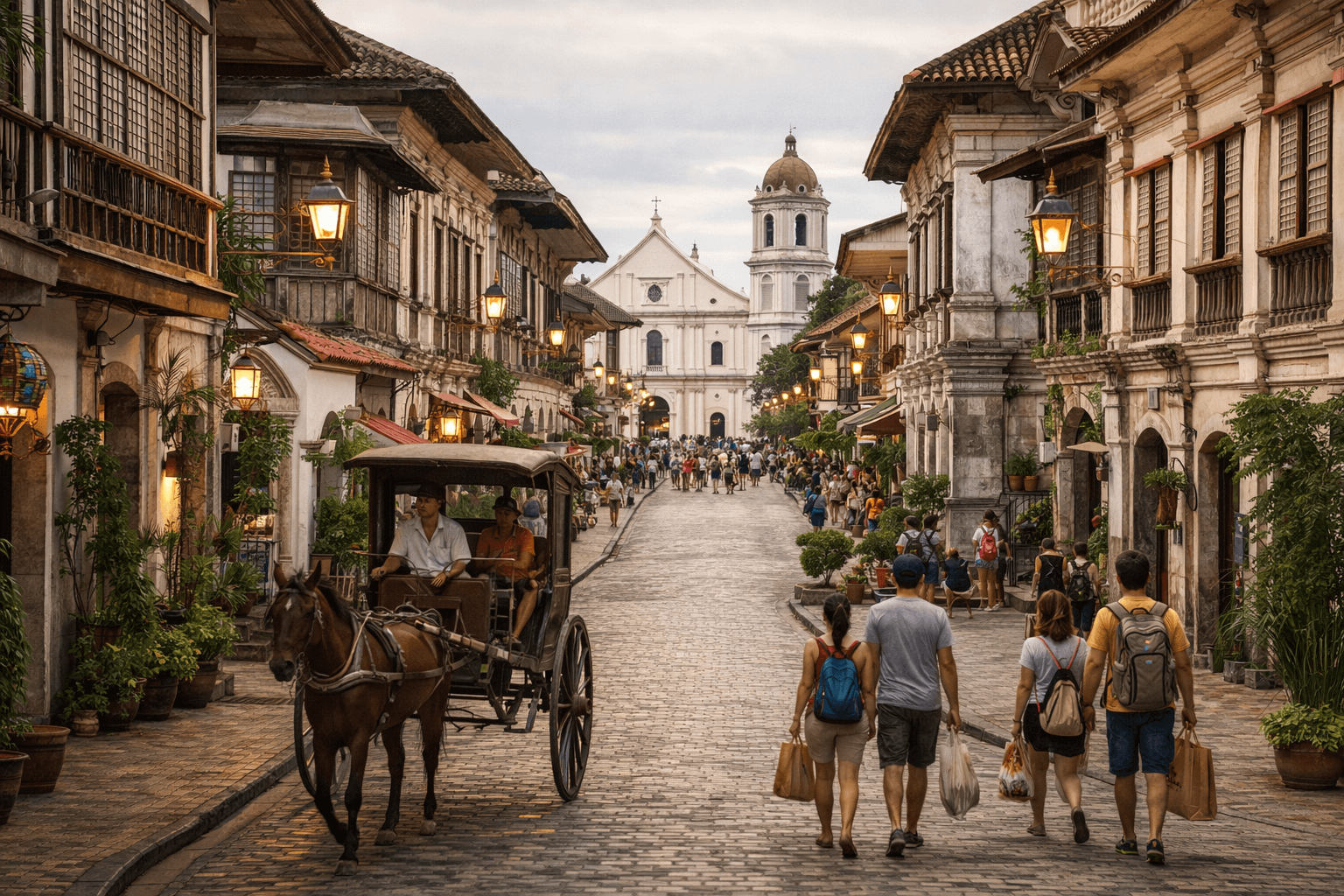
Calle Crisologo
A cobblestone street lined with ancestral houses, wooden windows, and capiz shell details, offering one of the most iconic views of Spanish-era Philippines.
Ancestral Houses & Museums
Structures such as Syquia Mansion, Crisologo Museum, and Padre Burgos House showcase the lifestyles, politics, and artistry of past generations.
Plaza Salcedo & Vigan Cathedral
These central landmarks anchor the city’s civic and religious life, blending public space with architectural grandeur and historical depth.
Living Traditions
From kalesa rides to local crafts and heritage cuisine, Vigan maintains customs that continue to thrive in everyday life.
Together, these elements create a cohesive, immersive heritage experience.
Historical & Cultural Significance
Vigan represents a rare example of a well-preserved Spanish colonial town in Asia:
Its urban layout reflects Spanish planning adapted to local conditions
Its architecture blends European design with Filipino and Chinese influences
Its preservation efforts have maintained the city’s original character
Its traditions keep history active rather than confined to museums
Vigan’s survival and conservation tell a story of cultural continuity and respect for the past.
Who It Attracts
Heritage Travelers seeking authentic historical environments
Cultural Enthusiasts drawn to architecture and tradition
Local and International Tourists exploring Philippine history
Photographers and Creatives inspired by timeless streetscapes
This broad audience gives Vigan lasting relevance and cultural vitality.
Why Vigan Matters Now
In an era where travel increasingly values authenticity and connection, Vigan offers something rare—a city that feels untouched by time. Its preservation reminds visitors that progress does not require erasing history, and that heritage can remain alive through careful stewardship and community pride.
Vigan stands as a reminder that the past continues to shape how we understand identity, place, and culture.
Key Takeaway
Vigan is more than a destination—it is a living heritage city. Through its preserved streets, ancestral homes, and enduring traditions, it allows visitors to experience Philippine history as a lived environment rather than a distant memory.
These timeless spaces help anchor national identity, inviting travelers to walk through history and witness the cultural roots that continue to define the Filipino story.